
Hot Weather and Paw Protection Tips for Dogs: What Every Pet Parent Needs to Know Memorial Day Weekend
Memorial Day weekend has a way of flying by in the best possible way.
The grill is going, the music is playing, the kids are running through the sprinklers, and everyone is finally, finally just relaxing and enjoying the day. And your dog? They're right there in the middle of all of it, tail wagging, soaking it all in.
Which is exactly why this is one of the most important things you'll read this weekend.
Not because you aren't paying attention. Not because you don't love your dog. But because holiday weekends are designed to be distracting — and heat has a way of becoming dangerous before anyone realizes it. It creeps up quietly, in the middle of all that fun, and by the time you notice something is wrong, your dog may already be in trouble.
The good news? A little awareness goes a long way. And that's exactly what this post is about.
Why Holiday Weekends Are Especially Risky for Overheating
On a normal day, most of us are pretty tuned in to our dogs. We notice when they're panting more than usual, when they're seeking shade, when something seems off.
But holiday weekends change the dynamic completely.
You're busy. You're distracted. You're catching up with people you haven't seen in months.
And your dog, who absolutely does not want to miss a single moment of the excitement, is out there keeping up with the energy of the day — even when their body is telling them to slow down.
Dogs don't take themselves inside when they get too hot. They don't tell you they need a break. They keep going because you're out there, because the kids are out there, because something exciting is always happening just around the corner. And by the time the signs of overheating become obvious, things can escalate quickly.
A dog's normal body temperature should stay between 100 and 102.2 degrees Fahrenheit. Once it climbs above that range, you're looking at heat stroke — and the consequences can be serious. If cooling measures aren't put in place and activity isn't reduced, a dog's temperature will keep rising, eventually leading to seizures, shock, and in the worst cases, death.
That's not meant to scare you. It's meant to help you understand that this isn't just about your dog being a little uncomfortable. Heat is a genuine health risk — and the most important thing you can do is know what to look for before it gets to that point.
Know the Signs — Before It Becomes an Emergency
One of the trickiest things about heat exhaustion in dogs is that the early signs are easy to miss, especially when you're in the middle of a busy, noisy gathering.
Here's the progression to understand:
Early warning signs — your dog is getting too hot and needs a break right now:
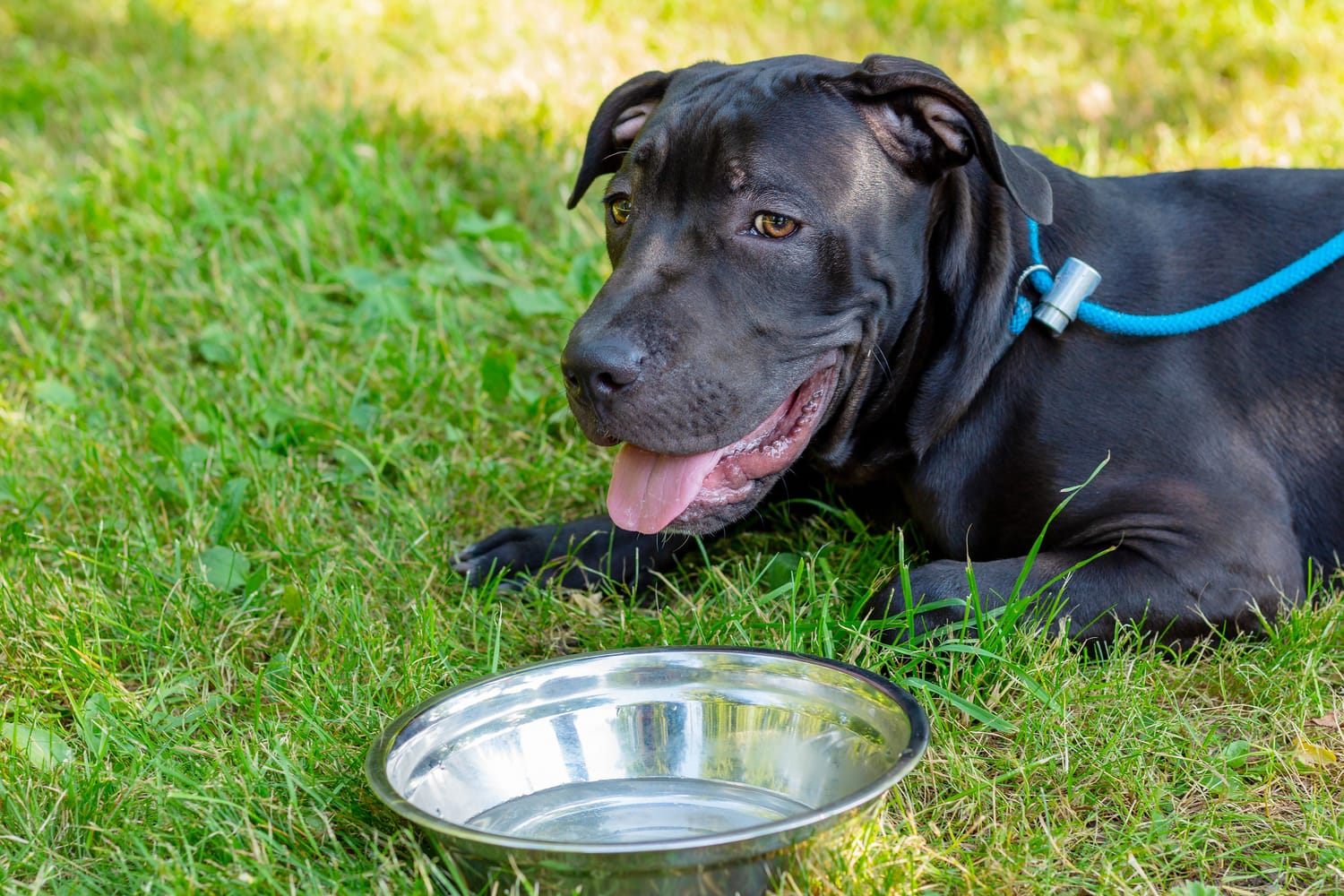
Excessive or heavy panting
Drooling more than usual
Seeking shade or trying to lie down
Slowing down or reluctance to keep moving
Restlessness or inability to settle
Lifting paws off hot surfaces
Heat exhaustion signs — this is urgent, act immediately:
Rapid heart rate and general weakness
Lethargy — not responding to your calls or showing interest in activities they normally enjoy
Labored breathing and gums turning dark red
Vomiting or diarrhea
Disorientation or stumbling
Heat stroke signs — this is a medical emergency, get to a vet immediately:
Rapid, shallow breathing, body temperature above 106°F, confusion, and seizures
Collapse or loss of consciousness
Heat stroke can affect dogs of all breeds and ages, but long haired and brachycephalic — or short nosed — breeds, as well as very young and older dogs, are at significantly higher risk. If your dog falls into any of those categories, be extra vigilant and consider limiting their time outdoors during the hottest parts of the day altogether.
And remember — you know your dog. If something feels off, trust that instinct and act on it. Getting them inside and cooled down is always the right call, even if it turns out they were fine.
The Pavement Problem — It's Hotter Than You Think
Here's something that surprises a lot of people.
You step outside, the air feels warm but manageable, and you think nothing of walking your dog across the driveway, the parking lot, or the sidewalk to get to the park or the gathering. It doesn't feel dangerously hot to you — but you're wearing shoes.
Your dog isn't.
When the air temperature is 86 degrees, asphalt can register at 135 degrees. At 125 degrees Fahrenheit, a dog's paw pads can burn in as little as 60 seconds. And pavement in full sun can reach those dangerous temperatures even in the late morning, long before the peak heat of the day. Sand, brick, and even artificial turf can heat up almost as quickly as asphalt.
Memorial Day weekend means parking lots, neighborhood sidewalks, boat docks, and beach sand — all surfaces that can be far more dangerous than they look.
The seven-second test is the simplest way to check before you walk. Place the back of your hand flat on the surface and count to seven. If it's too hot to hold it there for the full seven seconds, it's too hot for your dog's paws.
Make it a habit before every walk this weekend. It takes less that 10 seconds and it could save your dog a lot of pain.
Signs your dog's paws may be burned or burning:
Lifting or favoring paws
Licking or chewing at their feet
Refusing to walk or stopping suddenly
Visible redness, blistering, or raw spots on the pads
If you notice any of these, get your dog off the hot surface immediately, onto grass or a cool floor, and check their pads carefully. If you see blistering or raw areas, contact your vet.
How to Keep Your Dog Cool — Practical Tips That Actually Work
You don't have to keep your dog inside all weekend. You just need to be intentional about how and when they spend time outdoors.
Timing matters more than you think:
Walk and exercise your dog early in the morning or after the sun goes down — not during the hottest part of the day, which is typically between 10am and 4pm
If your dog will be at an outdoor gathering, give them a quiet break indoors mid-day to cool down and decompress
Limit intense play and running during peak heat hours — fetch in a sunny yard at 2pm on a hot day is a recipe for overheating
Always have water available:
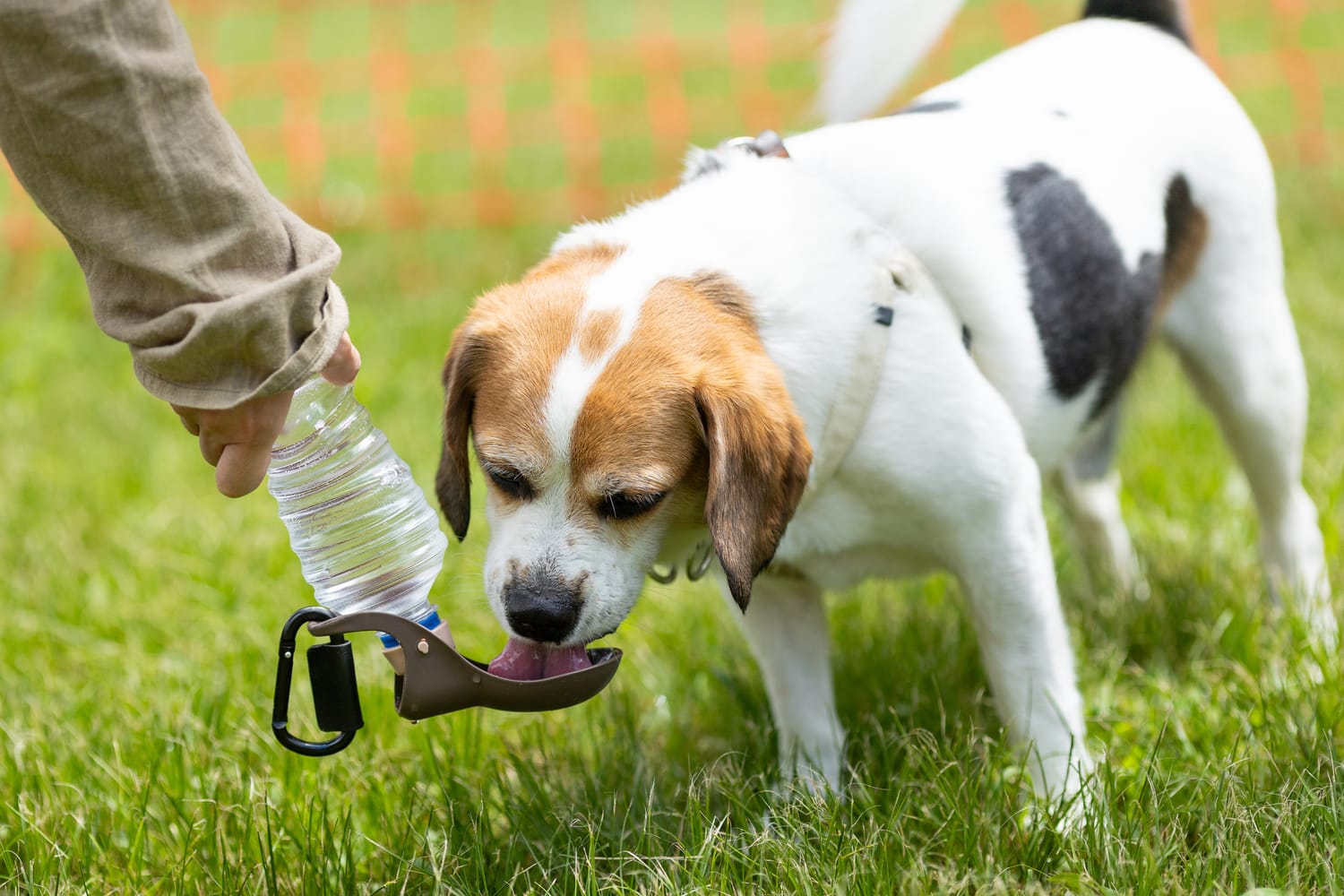
Bring fresh water and a collapsible travel bowl everywhere your dog goes this weekend — don't count on water being available at your destination
Offer water frequently, especially if your dog is active or excited
Dogs often don't drink enough when they're stimulated and busy — check in and encourage them to drink even if they don't ask
Create shade and cool spots:
If your dog will be outside for any length of time, make sure there is genuine shade available — not just a small patch, but enough for them to lie down and stay out of direct sun
A cooling mat is a wonderful thing to bring to an outdoor gathering — many dogs will naturally gravitate to it when they need to cool down
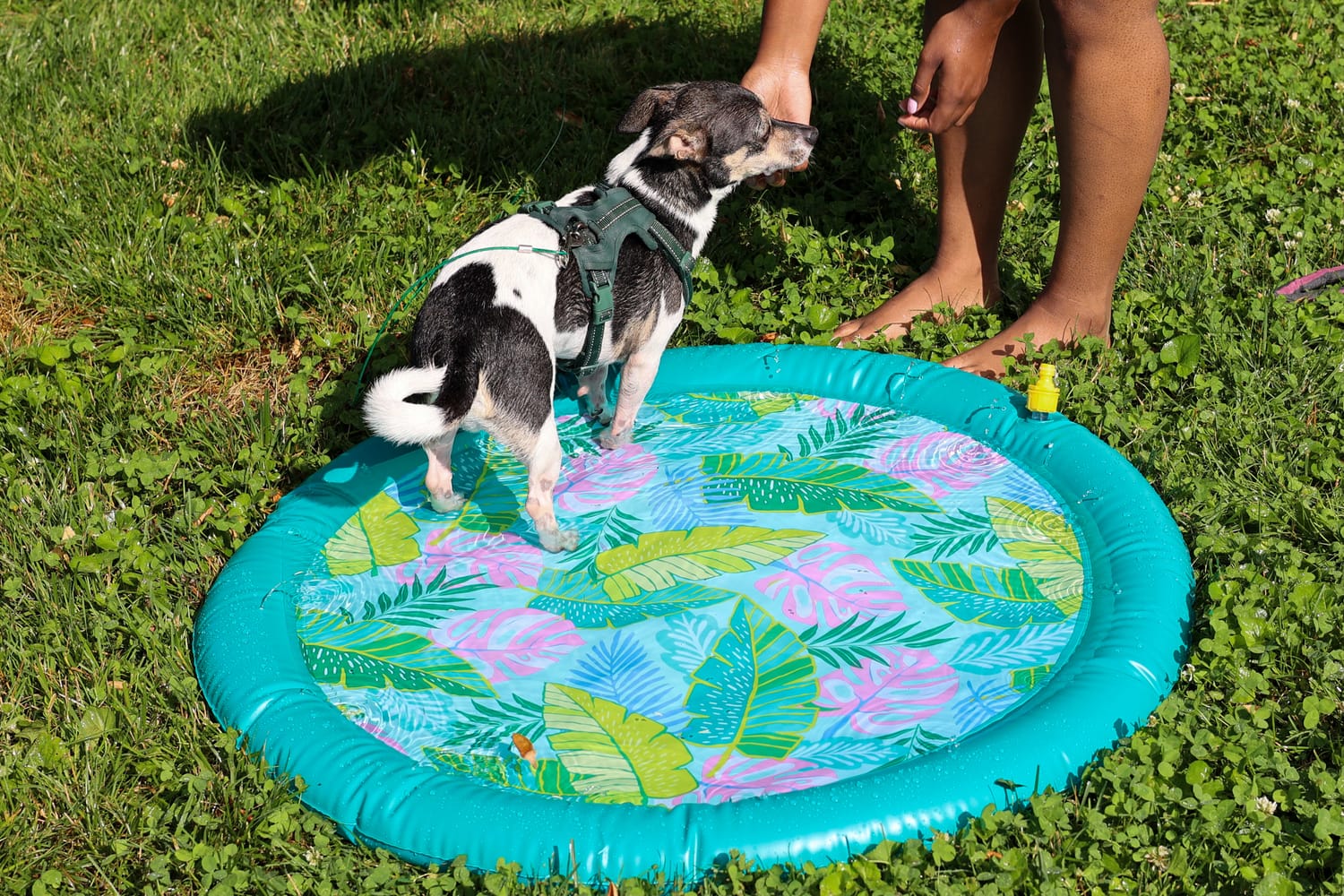
A kiddie pool with a few inches of cool water can be a great option for dogs who enjoy water
Protect those paws:
Do the seven-second test before any walk on pavement, sand, or artificial surfaces
Stick to grass and shaded paths whenever possible
Paw balm applied before walks can add a layer of protection and help soothe pads after time on hot surfaces — look for natural, dog-safe formulas
Dog boots are worth considering for dogs who will be on hot surfaces for any extended period — yes, some dogs resist them at first, but a little practice goes a long way
Consider a cooling vest:
If your dog runs warm, is a high-energy breed, or will be spending a lot of time outdoors in the heat, a cooling vest can make a meaningful difference in keeping their body temperature regulated throughout the day
Dogs Who Need Extra Attention in the Heat
While every dog needs to be monitored in hot weather, some dogs are significantly more vulnerable and need extra care this weekend.
Brachycephalic breeds — Bulldogs, Pugs, French Bulldogs, Boxers, Shih Tzus, and other short-muzzled dogs — are at higher risk for heat stroke because their airways make it harder to pant efficiently, which is a dog's primary way of cooling down. These dogs can overheat much faster than other breeds and should have their outdoor time carefully limited on hot days.
Senior dogs and puppies are also more vulnerable — older dogs may not regulate temperature as efficiently, and young puppies haven't fully developed their ability to cope with heat stress.
Overweight dogs carry extra insulation and work harder to do everything, including cooling down.
Dark coated and thick coated dogs absorb more heat from the sun and may overheat faster than their lighter coated counterparts.
Dogs who aren't used to the heat — if your dog spends most of their time in air conditioning and isn't acclimatized to outdoor heat, don't assume they can handle a full day outside just because other dogs seem fine.
If your dog falls into any of these categories, be conservative. Shorter time outdoors, more frequent breaks, extra water, and a cool indoor space available at all times is the right approach.
What To Do If Your Dog Gets Too Hot
If you notice signs of overheating, don't wait and hope it passes. Act immediately.
For mild to moderate overheating:
Get your dog into a cool, shaded, or air-conditioned space right away
Offer cool — not ice cold — water to drink. Ice cold water can cause stomach cramping
Apply cool (not cold) wet towels to their neck, armpits, and groin area and paw pads— these spots are most effective for cooling
Use a fan if available to help with evaporative cooling
Let them rest on a cool floor if possible
Do NOT:
Submerge your dog in ice water — the sudden temperature change can cause shock
Use ice packs directly on their skin
Force them to drink if they are disoriented or unresponsive
Pour water directly over your dog's face and head. It can cause panic and make breathing even harder when they're already struggling.
When to go to the vet immediately:
If your dog is vomiting, has diarrhea, is disoriented, collapses, has gums that are dark red or pale, or doesn't improve quickly with cooling measures — go to an emergency vet right away. Heat stroke is a life threatening emergency and every minute counts.
Treatment for heat stroke can cost anywhere from $500 to $1,000 for mild cases, with severe cases requiring ICU care potentially running $5,000 to $15,000 or more.
It's one of those situations where prevention is so much kinder — to your dog and to your wallet — than treatment.
Before the Weekend Begins...
Coming tomorrow — our final Memorial Day weekend safety checklist: everything you need to know before the celebrations begin, all in one place.
Final Thoughts
Nobody goes into a holiday weekend planning to let their dog overheat. It happens in the margins — in the happy, busy, distracted moments that make holidays so wonderful.
The most important thing you can do this weekend is just stay aware. Check in on your dog regularly. Do the seven-second test before walks. Make sure there's always shade, always water, and always a cool place for them to retreat to.
Your dog wants nothing more than to be right there with you all weekend long. A little extra attention to the heat means they can do exactly that — safely, happily, and tail wagging the whole time. 🐾
This post contains affiliate links, which means I may earn a small commission at no extra cost to you if you purchase through them. I only share products I genuinely use, trust, or believe may help make life safer and more enjoyable for dogs and their humans.

Dogs and Dandelions
Dogs & Dandelions is a blog for dog lovers who believe life is better with muddy paws, outdoor adventures, and a loyal companion by your side. Here you’ll find practical dog safety tips, seasonal advice, travel inspiration, and thoughtful resources to help dogs and their humans enjoy life together a little more safely — and a little more joyfully.

Dogs and Dandelions is dedicated to helping you create the safest, most joyful life for the dog who shares your whole world.



Join our pack! Get the good stuff — tips on dog safety, holistic health, and safer outdoor living and adventures with your dog — straight to your inbox. Plus, get instant access to our free guide: “10 Toxic Plants Every Dog Owner Should Know.”
© 2026 Dogs & Dandelions, all rights reserved.