
Essential Lost Dog Prevention Tips for Memorial Day Weekend
Holiday weekends are exciting, busy, and often a little chaotic — especially for dogs.
Between travel, outdoor gatherings, guests arriving, gates opening and closing, fireworks, and distracted routines, Memorial Day weekend can create the perfect conditions for your dog to slip away unnoticed. And even dogs with excellent recall or calm temperaments can panic in unfamiliar or overstimulating situations.
According to American Humane, approximately 10 million pets are lost or stolen in the United States every year — and holiday weekends can push that risk even higher. And if your pup doesn't have ID tags or a microchip, the odds of getting them back drop dramatically — only 15% of dogs in shelters without identification are ever reunited with their owners.
The good news is that most lost dog situations are preventable with a few simple precautions. In this post, we'll walk you through practical tips to keep your dog safe, secure, and easier to reunite with if the unexpected happens this Memorial Day weekend.
Why Dogs Are More Likely to Escape During Holiday Weekends
It's easy to assume that escape risks only apply to certain types of dogs — the ones who bolt at every opportunity, or the ones who've slipped through a fence before. But the truth is, holiday weekends have a way of catching even the most reliable dogs off guard.
Here's why.
Dogs thrive on routine. They know when it's time to eat, when it's time to go outside, and when the house is supposed to be quiet. Holiday weekends flip all of that upside down — and that disruption alone can raise your dog's stress levels before the festivities even begin.
Add in a yard full of unfamiliar people, kids running in and out of the house, a gate that's been opened more times than anyone can count, the smell of food coming from every direction, and suddenly even the most easygoing dog is operating in a completely different environment than they're used to.
And then the fireworks start.
For many dogs, the combination of overstimulation and a sudden loud noise is all it takes to trigger a panic response — and a dog in a full panic isn't thinking about recall cues or boundaries. They're thinking about one thing: getting away from whatever is scaring them.
That's not a training failure. That's a dog doing exactly what their instincts are telling them to do.
Understanding why dogs are more likely to escape during holiday weekends is the first step in preventing it.
The sections below will walk you through the most common escape triggers — and exactly what you can do about each one.
Open Gates, Guests, and Constant Activity
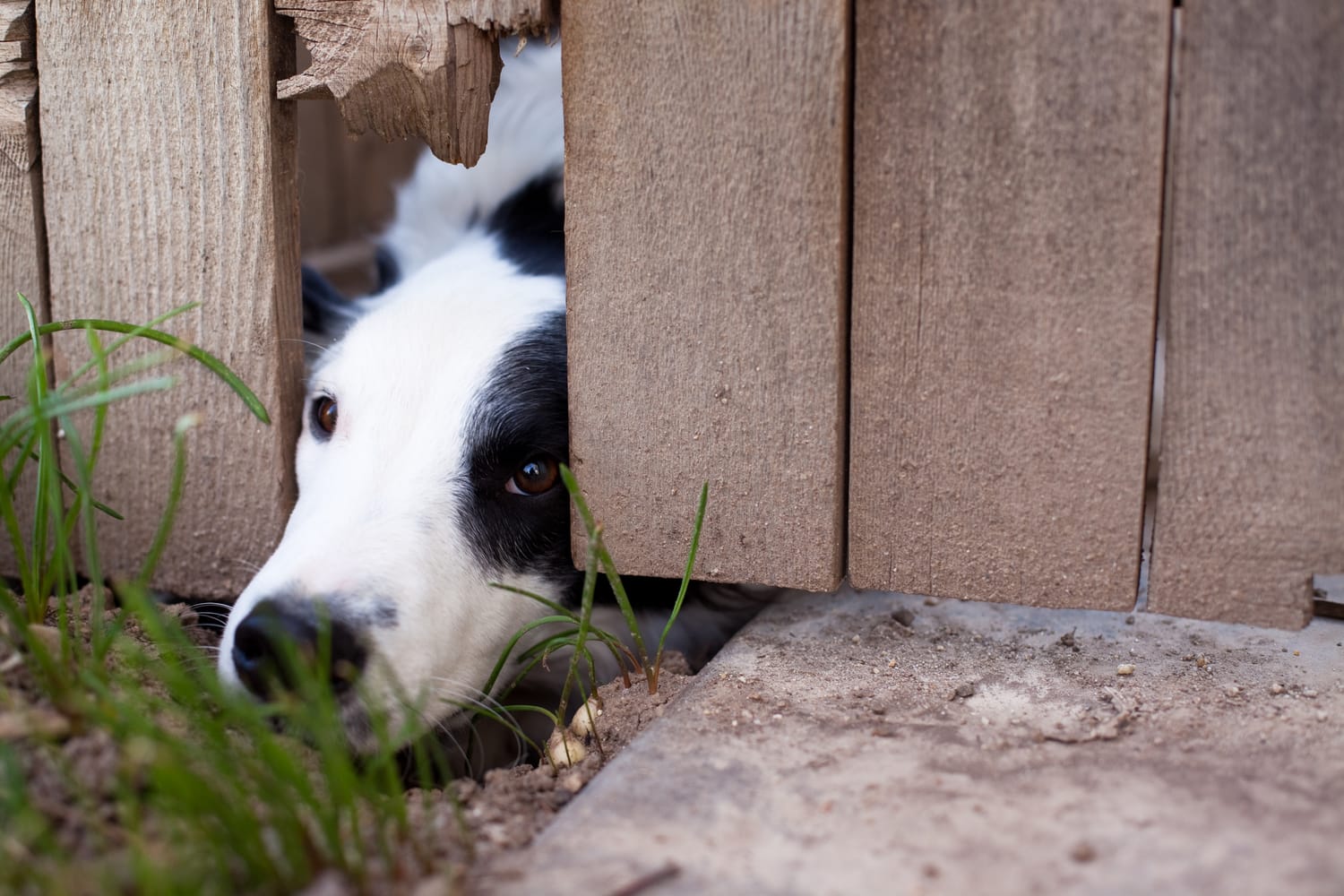
If there's one thing Memorial Day weekend is known for, it's people. Lots of them. Coming and going, in and out, back and forth — and every single time that gate or door opens, there's a window of opportunity for your dog to slip through unnoticed.
This is one of the most common ways dogs go missing during holiday weekends, and it happens more easily than most people expect.
It usually isn't one big moment. It's a series of small ones. A guest who didn't realize the dog was nearby. A gate that didn't latch all the way. A few distracted minutes while everyone was focused on the grill. And then someone looks around and realizes the dog isn't in the yard anymore.
And here's something worth thinking about — this risk doesn't only apply if the gathering is at your home. In some ways, it's even greater when you're bringing your dog to someone else's house.
When you're a guest, you're navigating a yard you've most likely never inspected, gates you've never tested, and a layout your dog has probably never seen. You don't know which latch is a little loose, which fence panel has a gap at the bottom, or which door the kids tend to leave open.
And when you're busy catching up with family or friends, it's easy to assume your dog is fine — right up until the moment you realize they aren't.
A few simple steps can make a big difference — whether you're hosting or visiting:
If you're hosting: Walk your fence line and check every gate latch before guests arrive. It only takes a minute and it's worth doing every single time.
If you're a guest: Do a quick walk of the yard before letting your dog off leash — even if it feels a little awkward. Check for gaps in the fence, unlatched gates, and any areas your dog could squeeze through or under.
Put a sign on the gate — or ask your host if you can — something simple like "Please keep gate closed — dog in yard" can be a surprisingly effective reminder for guests who aren't thinking about it.
Consider keeping your dog inside or in a secured area during the busiest moments — arrivals, departures, and food setup are the highest-risk windows, no matter whose house you're at.
Don't assume someone else is watching your dog. In a group setting, it's very easy for everyone to think someone else has eyes on the dog — and for no one actually to. That's exactly how it happens.
Snap an updated photo of your dog before the weekend begins. If you ever need to share it quickly in an emergency, you'll be glad you have a clear, recent one ready to go.
Make sure your dog is wearing a properly fitted collar with updated ID tags any time guests are present or your dog will be spending time in an unfamiliar yard.
A martingale collar can be especially helpful during busy gatherings for dogs that tend to back out of traditional collars when they get startled or overstimulated — and that risk is even higher in an unfamiliar environment where your dog may already be a little unsettled.
The goal isn't to spend the whole gathering hovering over your dog. It's just to be a little more intentional about the moments when escape is most likely — whether you're at your own home or someone else's — so you can enjoy the day without spending it worried about where your pup is.
Fireworks, Loud Noises, and Panic Responses
Even if your dog has never shown signs of anxiety before, fireworks are in a category of their own.
The unpredictability is a big part of what makes them so difficult for dogs. It's not just the volume — it's the fact that the booms seem to come out of nowhere, from no clear direction, with no warning and no explanation. For a dog who relies on pattern and predictability to feel safe, that kind of sensory chaos can be genuinely overwhelming.
Memorial Day weekend can even catch a lot of dog owners off guard too, because fireworks often start earlier than expected — sometimes days before the holiday, and sometimes in the middle of the afternoon before it's even dark outside.
A dog in a full panic responds with their survival instincts. That can look like trembling, hiding, excessive barking, or desperately trying to escape — through a fence, through a door, off a leash, out of a collar. It's one of the most common reasons dogs go missing around major holidays, and it can happen in a matter of seconds.
If your dog will be home during fireworks, a few simple steps can help them feel safer:
Bring them inside well before fireworks are likely to start — don't wait until you hear the first boom.
Create a quiet, comfortable space — a bedroom, a crate they love, or a cozy corner away from windows.
Close windows and curtains to muffle the sound and block the flashes.
Turn on calming music, white noise, or the TV to help mask the noise from outside.
Try a calming wrap or anxiety vest — many dogs respond really well to the gentle, consistent pressure they provide during stressful situations.
Offer a calming chew before the evening begins, rather than waiting until your dog is already in full panic mode. They work best when given proactively, while your dog is still relatively calm.
Exercise your dog earlier in the day so they're more relaxed and tired by evening.
Never leave an anxious dog outside unattended during fireworks — even in a fenced yard.
If your dog will be with you at an outdoor gathering, this is where a little extra preparation really pays off — because you have far less control over the environment than you do at home.
Start by thinking about what your dog will need before the fireworks even begin. A dog who arrives at a gathering already overstimulated, overtired, or overwhelmed from a long day is going to have a much harder time coping once the noise starts. Giving them a calm, quiet break mid-day — away from the crowd, somewhere they can decompress for a bit — can make a real difference in how they handle the evening.
It's also worth building a little toolkit to bring with you:
A calming chew given an hour or so before fireworks are expected can take the edge off for dogs who get anxious. Look for options with ingredients like melatonin, L-theanine, or chamomile — and if your dog has never had them before, it's worth trying one at home first so you know how they respond.
An anxiety vest is worth packing if your dog is noise-sensitive. You may feel a little silly pulling it out at a backyard BBQ, but your dog will thank you — and honestly, most fellow dog lovers will completely understand.
A long-lasting chew or lick mat can give your dog something calming and focused to do during the noisiest parts of the evening, helping redirect their attention and keep their stress levels lower.
A quiet, designated spot — a blanket in a corner of the yard, a spot under a table, or even a portable crate — gives your dog somewhere to retreat to when the environment gets to be too much. Having a "safe spot" they can go to on their own can reduce anxiety significantly.
Please keep in mind that portable crates vary a lot in durability — a panicked dog can tear through a soft-sided crate faster than you'd expect, so if you go that route, make sure you're still keeping an eye on them. Know your dog and plan accordingly.
Keep their leash on or within arm's reach at all times. A startled dog can move faster than you expect, and having a leash already attached means you have something to grab in the seconds that matter.
And pay attention to what your dog is telling you throughout the evening.
Early stress signals to watch for include:
Yawning repeatedly
Lip licking
Panting without being hot
Pacing or inability to settle
Trying to hide or stay close to you
Trembling or shaking
Refusing food or treats they would normally love
These are all signs your dog is hitting their limit — long before they reach full panic. Catching them early and giving your dog a break, a calming chew, or a quiet moment away from the noise is always better than waiting until they're already overwhelmed.
Sometimes the kindest thing you can do is simply head home before the fireworks really get going. A dog who feels safe is always worth leaving a little early for.
If your dog doesn't already wear a GPS collar, holiday weekends like Memorial Day are a good reminder of why it might be worth considering. Fireworks, unfamiliar environments, and overstimulated gatherings are exactly the kinds of situations where dogs are most likely to bolt — and if they do, real-time location tracking means you're not starting from zero. Even if you never need it, it's the kind of investment that's hard to regret having.
The Importance of Updated ID Tags and Microchips
This is one of those sections that feels a little basic — until it isn't.
Because here's the thing: most people assume their dog's ID tag and microchip information is current. And a surprising number of the time, it isn't. A phone number that changed two years ago. An address from a previous move. A microchip that was never registered after adoption.
And when a dog goes missing in the middle of a busy holiday weekend, those details matter more than almost anything else.
According to American Humane, only 15% of dogs found in shelters without ID tags or microchips are ever reunited with their owners. Fifteen percent. That means the vast majority of lost dogs who end up in a shelter — without any identification — never make it home.
That's a heartbreaking statistic. And it's almost entirely preventable.
Before this weekend, take a few minutes to check these things:
Read your dog's ID tag. Is the phone number still current? Is it legible, or has it worn down over time? If you're not sure, it's worth replacing.
Confirm your microchip registration is up to date. A microchip is only useful if the contact information attached to it is accurate. You can look up your chip number at Found Animals Registry or PetLink to verify your information.
Make sure your dog is wearing their collar and tags any time they'll be around guests, outdoors, or traveling — even if they're usually an indoor dog.
For dogs that tend to slip out of standard collars, again, a martingale collar offers a more secure fit that tightens gently when pulled — making it much harder for a dog to back out, without being restrictive during normal wear.
And if you've been thinking about a GPS collar, a holiday weekend is genuinely one of the best times to have one. Real-time location tracking means that if your dog does slip away, you're not starting from zero — you know exactly where to look.
Personalized ID tags are also a small but meaningful investment. Engraved tags with your current phone number and the word "microchipped" can make a real difference in how quickly a found dog gets home.
None of this has to be complicated. A few minutes of preparation before the weekend begins could make all the difference if something unexpected happens.
Travel and Vacation Safety Tips
Memorial Day weekend and road trips go hand in hand — and for a lot of dog owners, that means your pup is coming along for the adventure.
Which is wonderful.
It also means there are a few extra things worth thinking about before you leave the driveway.
Travel introduces a whole new set of escape risks that don't exist at home.
Rest stops with heavy traffic and unfamiliar smells.
New environments where your dog doesn't know the layout.
Vacation rentals or family homes with fences you haven't inspected.
And a dog who is already overstimulated from the car ride trying to navigate all of it at once.
Here are some practical travel safety tips to keep in mind this weekend:
Before you leave home:
Confirm your pet friendly accommodations ahead of time — don't assume. Call ahead and ask specifically about fencing, pet policies, and whether dogs are allowed in outdoor areas. A yard that looks great in photos may have gaps in the fence, no gate, or shared access that makes it unsafe for an off leash dog. Knowing before you arrive saves a lot of stress — and a lot of risk.
Make sure your dog is wearing a properly fitted collar with updated ID tags before you pull out of the driveway. It sounds simple, but it's easy to forget in the rush of packing.
Bring your dog's vaccination records and any medications — and keep them somewhere easy to find in case you need them unexpectedly.
Keep a recent photo of your dog on your phone for the entire trip, just in case.
On the road:
Always keep your dog leashed during rest stops, gas stations, and any unfamiliar outdoor areas. Busy traffic, unfamiliar smells, and unexpected noises can spook even a calm dog in seconds.
Never (I wish I could bold "NEVER" 10 times as big) leave your dog unattended in a parked car, even for a few minutes. Temperatures rise dangerously fast — especially during holiday traffic and crowded parking areas.
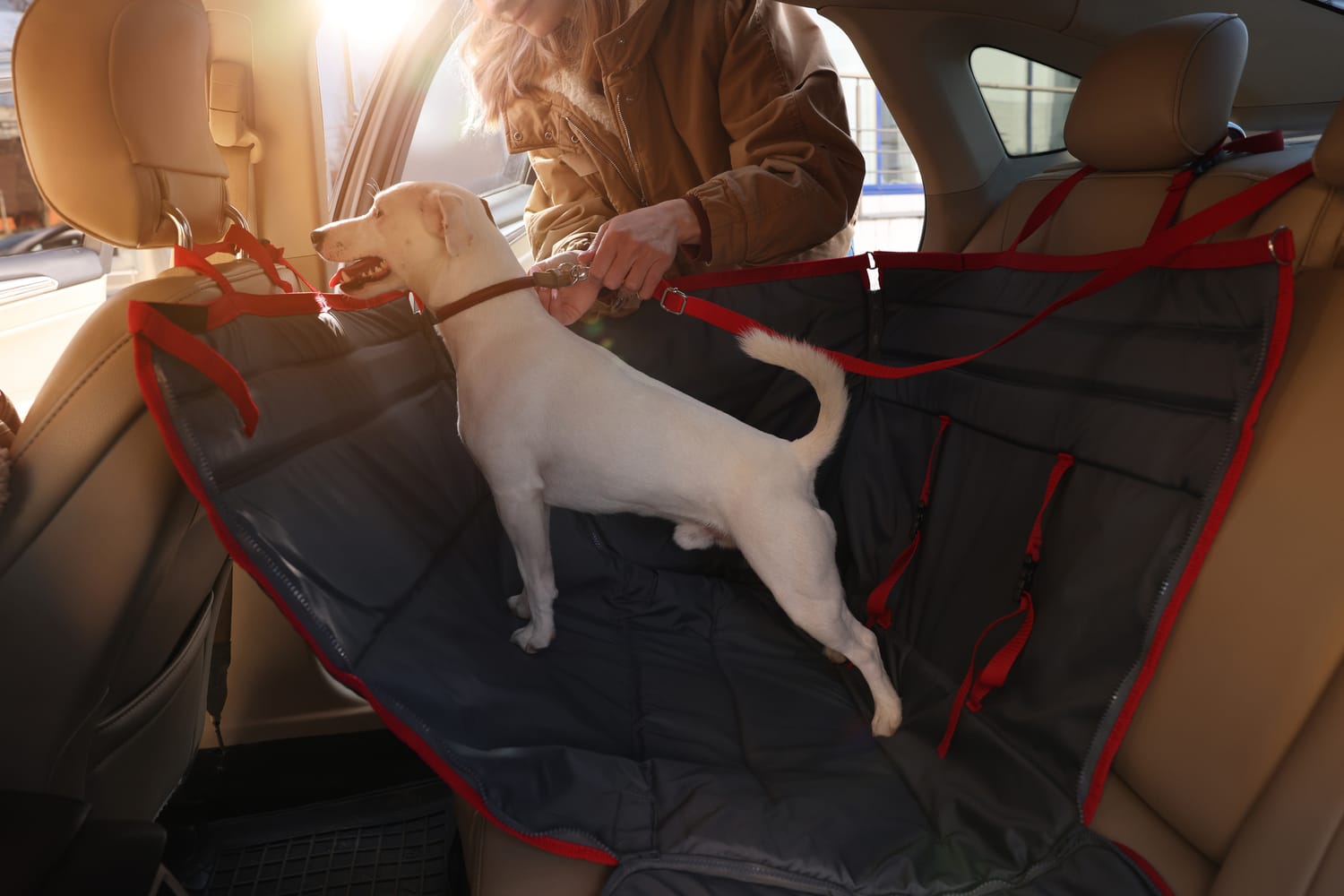
Use a secured travel harness or crate during car rides whenever possible — both for safety in the event of sudden stops and to prevent your dog from bolting when a car door opens.
Bring fresh water and offer it at every stop. Dogs often don't drink enough during travel and can arrive at your destination already stressed and dehydrated — which makes everything harder for them to handle.
When you arrive:
Give your dog time to sniff and settle before the chaos begins. This is one of the most underrated travel tips for dogs, and it can make a genuine difference in how they handle everything that follows. Before guests arrive, before the kids start running around, before the grill gets going — take your dog on a quiet walk or give them unhurried time to explore the new space on their own terms. Sniffing is how dogs process their environment and gather information. A dog who has had a chance to "read the room" on their own is going to feel significantly more settled and confident than one who was dropped straight into a busy, unfamiliar situation.
Inspect fences and gates at your destination before letting your dog off leash. A quick walk of the perimeter takes two minutes and could prevent a lot of heartache.
Bring familiar items — a favorite blanket, a toy, their regular food — to help your dog feel more grounded in an unfamiliar space.
If your dog goes missing away from home:
This scenario is one of the most stressful situations a dog owner can face, because you're in unfamiliar territory on top of everything else.
The steps for finding a lost dog are a little different when you're in an unfamiliar area — and it's worth having a plan before you need one. We cover exactly what to do in detail in the section below, but the most important thing to remember is this: act immediately and go as local as possible — the faster you get the word out to people in that specific area, the better your chances of a happy reunion. Every minute matters — so keep reading.
Traveling with your dog can be one of the best parts of a holiday weekend. A little extra preparation just makes it safer — and a whole lot less stressful — for everyone.
What To Do Immediately If Your Dog Goes Missing
Even when you've done everything right, the unexpected can still happen. And if it does, the first few minutes and hours matter more than most people realize.
Here's what to do if your dog goes missing during Memorial Day weekend:
1. Start searching immediately — don't wait. Begin looking in the area where your dog was last seen. Call their name calmly. A panicked, frantic voice can actually make a scared dog less likely to come to you, not more. And as hard as it is — if you spot your dog, don't chase them. Running toward a frightened dog almost always makes them run faster in the opposite direction. Instead, try sitting or crouching on the ground, calling their name softly, or even turning away from them. Sometimes acting disinterested is the most effective way to get a scared dog to come closer on their own.
2. Alert your immediate area right away. Tell everyone at your gathering, your neighbors, and anyone nearby. The more eyes looking in those first few minutes, the better.
3. Post on local lost pet groups immediately. Post on Next Door and search Facebook for lost and found pet groups in your area and post right away with a clear photo, your dog's description, the last known location, and your contact information. If you can't access local pages yourself, ask someone you know and trust from that community to post for you and keep you in the loop if relevant comments are made on the post.
4. Use apps designed to find lost pets. Apps like Pawboost, Petco Love Lost, and Ring Neighbors can get the word out quickly to people in the immediate area. Pawboost automatically posts to local Facebook lost and found pages and Nextdoor simultaneously — so one post does a lot of the work for you. Petco Love Lost uses facial recognition technology to scan found pet listings for a match to your dog's photo. And the Ring Neighbors app can tap into an existing network of neighborhood cameras to help spot your dog in real time.
5. Contact local shelters and animal control. Call every shelter within a reasonable radius and file a lost pet report. Visit in person if you can — descriptions over the phone don't always match how shelter staff identify animals. Check back frequently, and don't assume no news means your dog isn't there.
6. Contact local veterinary offices. If someone finds an injured or disoriented dog, a vet office is often one of the first places they'll take them. A quick call to nearby clinics can go a long way.
7. Put something familiar outside. Leave your dog's bed, a worn piece of your clothing, or their food bowl near where they went missing. Familiar scents can help draw a lost dog back toward home.
8. Post physical flyers in your area. Simple, clear flyers with a large photo and your phone number — posted at eye level near where your dog went missing, at nearby intersections, and at local veterinary offices — can make a big difference. Include the word "REWARD" even if you haven't decided on an amount yet, as it increases the likelihood that people will call.
9. Check your microchip registration again. If your dog is found and taken to a shelter or vet, the first thing they'll do is scan for a microchip. Make sure your information is up to date so that call comes to you.
**If your dog goes missing away from home, there are a few additional steps worth knowing:
Don't assume the local shelter system works the same way yours does. Every area handles stray animals differently. Search for animal control, humane societies, and rescue groups specific to the city, county, or region where you are — not where you live.
Post in local Facebook groups and community pages specific to that area. People who live there will know the neighborhood, the shortcuts, and the hiding spots in ways you don't. Again, If you can't access local pages yourself, ask someone you know and trust from that community to post for you and keep you in the loop if relevant comments are made on the post.
File a lost pet report with local animal control right away — and follow up in person if at all possible. Don't rely solely on a phone report.
If you have a GPS collar on your dog, activate tracking immediately and share your dog's last known location in every post and report you make.
Don't leave the area without making a plan. If you have to head home before your dog is found, designate a local contact — a shelter, a rescue volunteer, or even a kind neighbor — who can help coordinate the search and reach you immediately if your dog is spotted or found.
10. Don't stop searching. Lost dog searches can take days or even weeks. Continue checking shelters in person, keep your posts active on social media, and consider expanding your search radius over time. Many dogs are found much farther from home than their owners expected.
The most important thing is to act quickly, stay calm, and get the word out as broadly as possible. Most dogs who go missing are found — and the more people who know to look for yours, the better your chances of a happy reunion.
Before the Weekend Begins...
If you missed the first post in this series, Memorial Day Dog Safety Tips: 7 Hidden Holiday Dangers for Dogs is a great place to start — it covers a broader look at everything from heat exhaustion and water safety to BBQ food dangers and travel tips, all in one place.
And over the next couple of days, we'll be sharing:
Hot weather and paw protection tips — because holiday weekends mean long hours outside, and knowing the signs of overheating before you need that information could make all the difference
A final Memorial Day weekend safety checklist — a quick, practical rundown of everything you need to know before the celebrations begin, all in one place
So if your family will be spending extra time outdoors, traveling, or celebrating alongside your pup this weekend, be sure to check back. 🐾
Final Thoughts
Memorial Day weekend is meant to be fun, relaxed, and full of good memories — and with a little preparation, it absolutely can be, for you and your dog.
Most lost dog situations aren't the result of carelessness. They happen in the middle of busy, happy, distracted moments — exactly the kind of moments that holidays are made of. The good news is that a few simple steps taken before the weekend begins can dramatically reduce the risk of your dog slipping away unnoticed.
Check your fence. Update that ID tag. Confirm your microchip registration. Know your plan if something goes wrong.
Your dog doesn't need a perfect holiday. They just need you paying attention — and that's something every one of us can do.
Stay safe out there, and have a wonderful Memorial Day weekend. 🐾
This post contains affiliate links, which means I may earn a small commission at no extra cost to you if you purchase through them. I only share products I genuinely use, trust, or believe may help make life safer and more enjoyable for dogs and their humans.

Dogs and Dandelions
Dogs & Dandelions is a blog for dog lovers who believe life is better with muddy paws, outdoor adventures, and a loyal companion by your side. Here you’ll find practical dog safety tips, seasonal advice, travel inspiration, and thoughtful resources to help dogs and their humans enjoy life together a little more safely — and a little more joyfully.

Dogs and Dandelions is dedicated to helping you create the safest, most joyful life for the dog who shares your whole world.



Join our pack! Get the good stuff — tips on dog safety, holistic health, and safer outdoor living and adventures with your dog — straight to your inbox. Plus, get instant access to our free guide: “10 Toxic Plants Every Dog Owner Should Know.”
© 2026 Dogs & Dandelions, all rights reserved.